Here you can find animated and interactive versions of Figures 6 and 11 in Rodrigo Ochigame, Emilie Skulberg, and Jeroen van Dongen, Coloring Black Holes: Epistemic and Aesthetic Choices in Astronomical Imaging, Philosophy of Physics 4, no. 1 (2026): 14, 1–43.
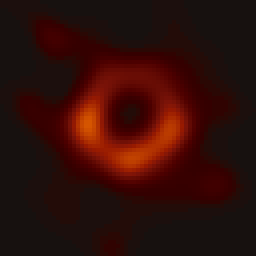
In 2019, the first image of a black hole’s shadow based on observation was released by the Event Horizon Telescope Collaboration (EHT), featuring the supermassive black hole M87*. The paper cited above discusses the making of this image, which involved difficult choices about imaging algorithms and parameters. These figures allow the reader to directly examine some of those choices.
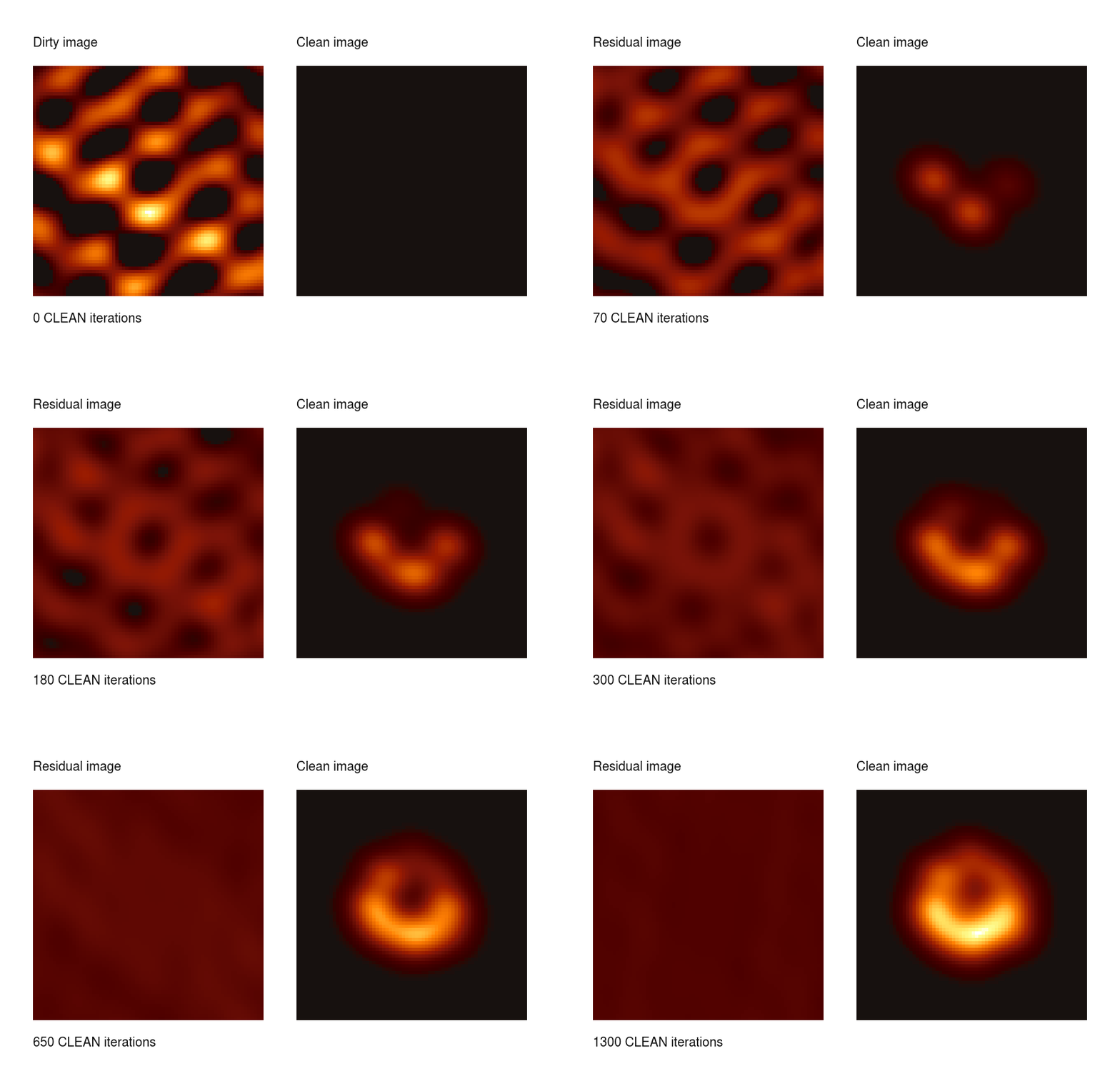
Animated demonstration of the CLEAN algorithm, based on the EHT’s script for the Difmap software. The animation shows the “dirty” or “residual” image (left) and the “clean” image (right) of M87* at successive steps of the algorithm, spanning 1,300 iterations. This algorithm represents the sky as a collection of point sources.
Interactive demonstration of parameter choices for an RML algorithm, based on the software package eht-imaging. Following the EHT’s “parameter survey,” it samples seven parameters, totaling 37,500 possible combinations. We computed the images for all combinations in advance; the demonstration displays these precomputed results rather than running the algorithm live. The reader can vary the parameters and compare the resulting images.